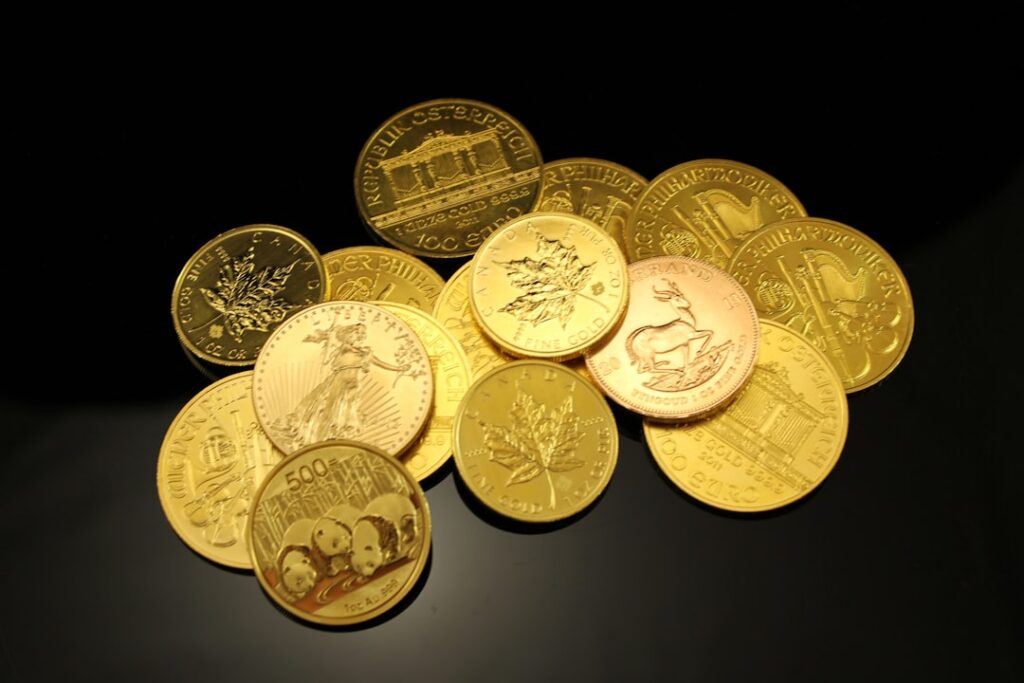
Introducing Reliability Evaluation in Gold Lending
Gold is sacred in many cultures. You’d expect every gram to be weighed with precision. But how do you ensure that your AI-driven valuation tool doesn’t wobble when conditions change? Enter reliability evaluation in multi-fidelity testing. It’s not a buzzword. It’s the backbone of trust in AI-powered gold loans.
In this post, we’ll walk through why layered testing matters. You’ll see how Dhahaby applies multi-fidelity frameworks to guard against surprises. We’ll break down real steps, from simulating edge cases to live field trials. Ready for a reliability evaluation that transforms your gold into financial power? Reliability evaluation by Dhahaby: Transforming Gold into Financial Power
Why Multi-Fidelity Testing Matters
When you design an AI model for gold appraisal, you face a simple truth: real-world data is messy. Testing only on perfect lab images or historical records leaves gaps. Multi-fidelity testing plugs those gaps by blending:
- Low-fidelity simulations (cheap, fast, but simplified)
- Medium-fidelity digital twins (closer to reality with noise and variations)
- High-fidelity live trials (real gold, real environments)
This layered approach supports thorough reliability evaluation. Each layer adds confidence in the AI’s robustness. Think of it like checking your car’s brakes on flat roads, sloping roads, and in rain. You want every scenario covered.
Key Benefits at a Glance
- Detect hidden biases before deployment
- Test under varied lighting, purity and wear conditions
- Minimise costly late-stage fixes
- Align with Shariah compliance and transparency
The Challenges of AI-Driven Gold Appraisals
Traditional loans secured by gold often confuse borrowers with unclear valuations and hidden fees. Now throw in AI, and the black-box concern pops up:
- Randomness in Training: Weight initialisation, batch order and data sampling can skew outcomes.
- Data Bias: Lab datasets rarely mimic dusty market stalls or jewellery counters.
- Dynamic Models: An AI model tweaks itself as new data arrives. What passed yesterday may falter today.
- Limited Test Oracles: You can’t label every scrap of gold by hand.
- Operational Gaps: Lab tests ignore jewellery shop lighting, customer handling or temperature effects.
All these factors threaten a sound reliability evaluation. The solution? Systematic multi-fidelity testing.
Dhahaby’s AI-Assisted Asset Valuation Framework
Dhahaby takes gold lending beyond the counter. Key pillars include:
• AI-Assisted Valuation: Custom computer vision models detect karat marks, scratches and weight.
• Insured Custody: Each bar is insured in transit and storage.
• Shariah-Compliant Structure: Transparent fees and fair margins.
• Instant Cash Loans: Funds released in minutes after appraisal.
• Asset Tokenization (upcoming): Turn your gold into digital tokens for added liquidity.
Beyond financial services, Dhahaby also offers Maggie’s AutoBlog, an AI-powered content service. It automatically generates geo-targeted blog posts on gold trends and market insights—perfect for SMEs looking to boost online visibility without fuss.
Building a Multi-Fidelity Testing Strategy
Here’s how Dhahaby ensures a rock-solid reliability evaluation:
-
Simulated Data Generation
– Use software tools to add noise, blur or reflections to digital gold images.
– Create worst-case scenarios: extreme lighting, edge focus, partial occlusion. -
Digital Twin Deployment
– Mirror appraisal workflows in a virtual lab.
– Run thousands of test cases on varied karat alloys and shapes. -
Live Field Trials
– Partner with certified jewellers in the GCC.
– Test AI valuations against expert human appraisals under real shop conditions. -
Continuous Feedback Loop
– Automate error logging and heatmap analysis.
– Identify weak points (for example, low-confidence regions near the jewellery clasp).
– Retrain models on misclassified samples to close the loop.
Systematic layering like this highlights issues early and slashes late-stage churn. The result? A dependable reliability evaluation across the entire appraisal lifecycle.
Example: From Lab to Shop Floor
Imagine you have a new computer vision model for detecting karat stamps. Dhahaby’s steps might look like:
• Lab simulation: Gaussian blur applied via OpenCV to desktop images.
• Digital twin: Integrate model in a mock shop-floor environment with variable LED lighting.
• Live test: Deploy on a jeweller’s smartphone, scanning 100 bars under normal business hours.
Each step yields metrics—accuracy, precision, recall, F1 score—and flags when the model drifts. Over 3,000 test runs, you’ll see patterns. Perhaps error rates spike at 40°C. That insight drives targeted retraining.
Halfway through your testing journey, you want to ensure you’re on track. For a detailed look at Dhahaby’s methods and to kick off your own reliability evaluation, visit Reliability evaluation by Dhahaby: Transforming Gold into Financial Power
Best Practices for Robust Evaluation
-
Document Model Fidelity
Label every version and environment. Was it a low-res drone feed or a 12MP smartphone scan? -
Summarise Test Data
Use dashboards and heatmaps to visualise missing or incorrect detections. -
Relate Models to Outcomes
Quantify the performance drop between simulation and live tests. -
Blend White-Box & Black-Box Tests
– White-box: Inspect model internals, neuron coverage and code coverage.
– Black-box: Focus on input-output mismatch without peeking under the hood.
– Grey-box: Combine both when partial access is allowed. -
Integrate Evidence
Bring all results under one “body of evidence” to inform go/no-go decisions.
Adopt these steps, and you’ll nail your reliability evaluation long before your gold-backed credit card or tokenization feature goes live.
Measuring Success: Key Metrics
To prove your appraisals stand strong, track:
- F1 Score on live samples
- Error Heatmap Intensity at boundaries
- Retraining Frequency when drift is detected
- Operational Downtime from model failures
- Customer Satisfaction via post-loan surveys
A continuous, data-driven approach to reliability evaluation keeps Dhahaby’s promise of fairness and transparency intact.
Conclusion
Testing AI models for gold valuation isn’t a one-and-done task. It’s an ongoing cycle of simulation, digital twins, live trials and feedback. That’s multi-fidelity testing in action. With a solid reliability evaluation framework, Dhahaby ensures every gram of gold secures a fair loan, every time.
Unlock instant cash loans against your gold—securely, transparently and Shariah-compliant. Ready for your next step? Reliability evaluation by Dhahaby: Transforming Gold into Financial Power
Share
Related posts